


Why Food Is the Hardest Test for AI Imagery (And How We Pass It)



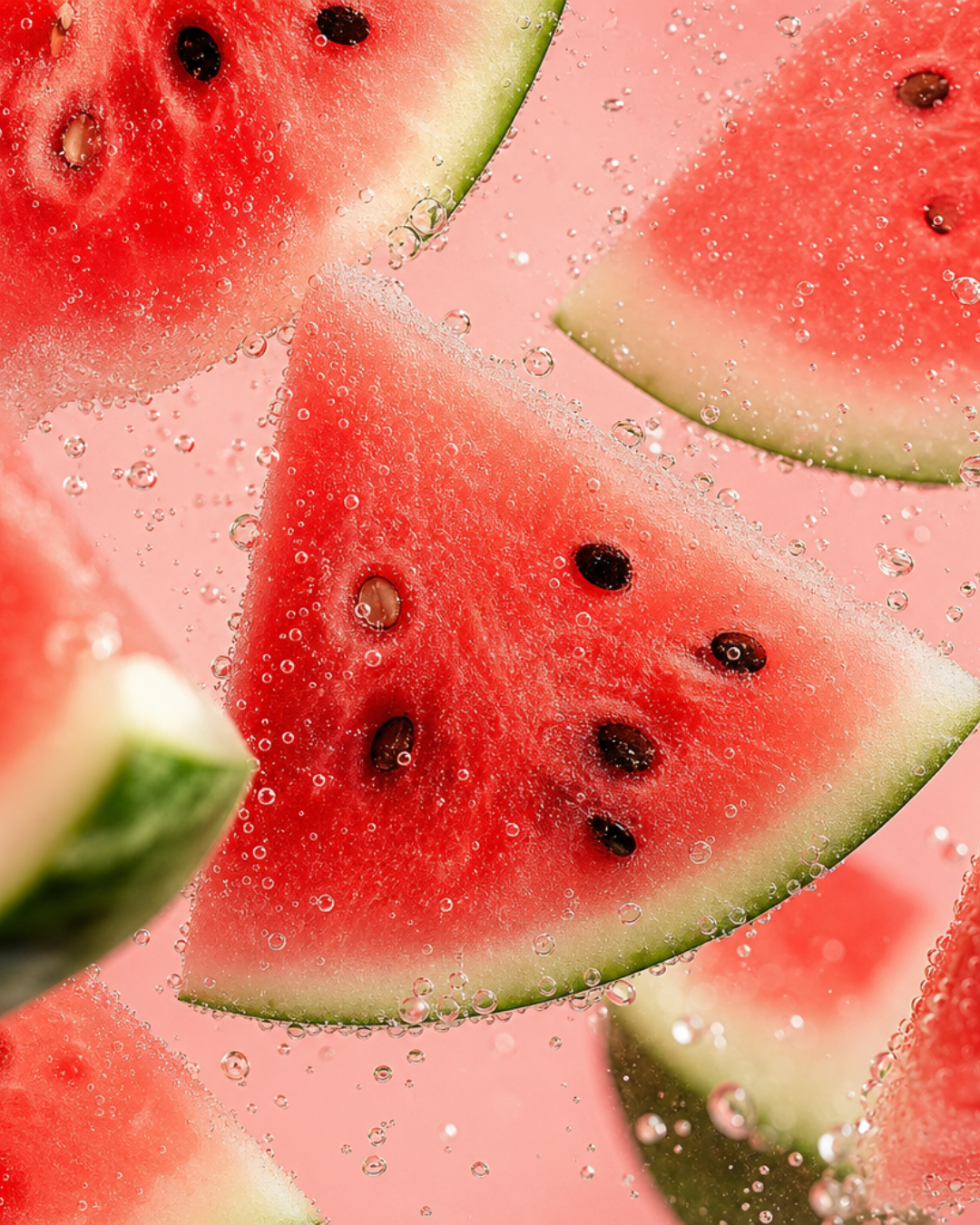


Appetite appeal is a physical response
Most product photography asks the viewer to understand something: what it is, what it does, why it's better. Food photography asks for something more primitive. It has to make your mouth water. That response is fast, instinctive and brutally unforgiving — people have spent their whole lives looking at real food, and they can tell in a fraction of a second when something isn't quite right.
That's why food is where cheap AI imagery gets found out first. A slightly-off shoe still looks like a shoe. A slightly-off sausage roll looks inedible.
The five places AI food shots go wrong
1. Texture that's too perfect. Real pastry flakes unevenly. Real crumb has holes of different sizes. Real chocolate has bloom and fingerprints. Untrained AI output smooths all of it into a waxy, plastic perfection that reads as fake — and fake food doesn't look tasty, it looks like a display model.
2. Physics. Steam that rises the wrong way. Sauce that sits on top of food instead of soaking in. Condensation on a cold can that beads in a pattern no real can would make. Crumbs that float. These are tiny details, but appetite appeal lives in tiny details.
3. Your actual pack. Ask a model to generate your crisps and you'll get a bag of crisps — the logo mangled, the flavour colour wrong, the window in the wrong place. On a supermarket shelf, pack recognition is everything. An image that doesn't show your real pack is worse than no image at all.
4. Honest portions and scale. AI loves abundance: overflowing bowls, impossibly generous fillings, a hand that's somehow the size of a plate. Beyond looking strange, imagery has to fairly represent what customers actually get — overselling the product is a fast route to disappointed buyers and awkward conversations.
5. Light that tells the truth. Food is lit to reveal surface — the glisten on glaze, the translucency of a grape, the char on a crust. Flat or inconsistent lighting kills all of it, and mismatched light between product and scene is the single fastest tell that an image has been composited.
How directed production gets it right
None of these are reasons to avoid AI for food. They're reasons to stop treating it like a prompt box.
- We start from your real product. Every pack shot begins with a photo of the actual pack — even a phone photo of a sample works. The AI builds the world around it; your product stays your product.
- We brief like a food stylist. Temperature, moisture, crumb, the moment of the bite, which way the steam goes. The more specific the direction, the more real the result.
- We plan shots by job. Pack-hero shots carry the detail load and get the heaviest control. Mood and lifestyle shots can run freer. Treating every image the same is how mistakes slip through.
- We throw most of it away. A high kill rate is the quality control. If it wouldn't survive a buyer's scrutiny on a retailer's homepage, it doesn't leave the studio.
Where it earns its keep
Done properly, AI production solves the problem food brands actually have: not one perfect image, but a constant demand for fresh ones. Seasonal campaigns. Serving suggestions for every SKU. Retailer-specific assets. Paid social variations that need refreshing every few weeks. That's a content load a traditional food studio can't meet without the budget to match — and it's exactly where a directed AI workflow shines.
You can see how this looks in practice in our food & beverage work.
The test worth running
Food is the hardest category to fake, which makes it the best one to judge an AI studio on. If a partner can make your product look genuinely mouth-watering, they can handle anything else in your range.
Want to see it with your own product? Claim a free visual sample — send us a photo of your pack and we'll show you what it can become.

Get a free creative audit of your product imagery.


